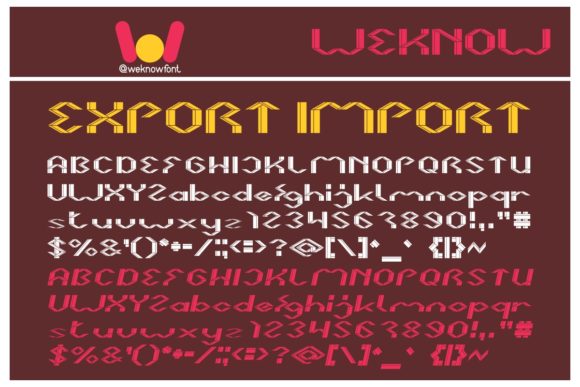
Export Import: A Font That Elevates Editorial Design
Sitting at my desk, I was tasked with redesigning the header for a new lifestyle blog. The goal was simple: find a font that would feel modern yet inviting, something that could capture the essence of creativity and curiosity in every post. After a few rounds of testing, I landed on Export Import. It wasn’t just any display font—it had a rhythm, a mood, and a visual character that felt right for the project.
Export Import is a display font that plays with abstract shapes in a way that feels both intentional and playful. Its curves and angles don’t follow traditional typography rules, but that’s exactly what makes it stand out. It has an eclectic beauty that invites attention without being overwhelming. When placed on a page, it doesn’t just sit there—it moves, it breathes, it speaks.
A Font for Creative Projects
I began by using Export Import as the main title for the blog header. It immediately gave the site a fresh, dynamic look. The font’s unique structure allowed me to create a hierarchy that guided the reader’s eye from the headline down to the subheadings and body text. What I loved most was how it balanced boldness with elegance—perfect for a brand that wants to be seen as both professional and approachable.
Next, I tested it in other areas of the blog layout. For section headings, Export Import worked well when paired with a clean sans serif font like Helvetica or Arial. This combination created a nice contrast between decorative and readable elements. In pull quotes, it added a touch of personality, making important statements pop without distracting from the content.
The font also found its place in the blog’s newsletter headers. With its rhythmic flow, it helped set the tone for each issue, creating a sense of continuity across different publications. Whether used in a digital magazine layout or a printable planner, Export Import brought a consistent visual identity to all editorial assets.
Real-World Applications
One of the most exciting parts of working with Export Import was seeing how it adapted to different formats. For a recipe ebook I was designing, the font made an ideal choice for chapter titles. Its abstract forms felt like a natural fit for a collection of creative dishes. I even used it in the cover design, where it paired beautifully with a soft background texture to create a visually striking first impression.
In a wedding guide I helped design, Export Import was used sparingly but effectively. It appeared in the main title and as a decorative accent in sidebars, adding a touch of sophistication without overpowering the content. For a coaching workbook, it became the go-to font for chapter openers, helping to establish a sense of focus and intentionality throughout the material.
When considering screen readability, I noticed that Export Import performed well on mobile layouts. Though it’s a display font, its structure ensured that it remained legible even at smaller sizes. For print materials, I made sure to test it in different weights and styles, ensuring that it maintained its visual appeal across various mediums.
Pairing and Practical Considerations
Font pairing is one of the most critical aspects of editorial design, and Export Import offers a lot of flexibility in this regard. When used as a display font, it works best alongside a readable serif or sans serif font for body copy. For example, pairing it with Georgia or Garamond gives the design a classic, refined look, while combining it with Roboto or Lato adds a modern, minimalist feel.
I also took note of the font’s included styles and alternates. The availability of ligatures and variations allowed for more creative expression, especially in titles and decorative accents. Before finalizing any project, I always check the font’s multilingual support and file formats, ensuring that it can be used seamlessly in ebooks, templates, and client publications.
For those looking to use Export Import in commercial projects, it’s essential to review the licensing terms carefully. Understanding the scope of use—whether for web, print, or digital downloads—is crucial for maintaining compliance and protecting the integrity of the design work.
Export Import is more than just a font; it’s a tool that helps shape the reading experience. Whether you’re designing a blog header, crafting a magazine layout, or building a course PDF, this display font brings a unique energy to your content. It’s not about following trends—it’s about finding a typeface that feels right, one that enhances the message and engages the audience in a meaningful way.